How Can Japanese Manufacturers Choose Plastic Recycling Pelletizing Equipment?
2026-05-29

Japanese manufacturers have long prioritized quality consistency, process efficiency, and resource utilization. Since the Act on Promotion of Resource Circulation for Plastics came into effect on April 1, 2022, the challenges facing the plastics industry have expanded well beyond waste disposal — manufacturers are now expected to establish a complete plastic resource circulation model that spans product design, production processes, and end-of-life recovery.
For manufacturers of plastic film, packaging materials, extruded products, agricultural film, and industrial plastic goods, the trim scraps, cutting waste, printed film, agricultural film, and washed regrind generated on the shop floor can — with the right equipment — be reprocessed into recycled pellets ready for further use. This not only cuts material waste but also improves how efficiently resources are used within the plant.
That said, recycling and pelletizing is not a problem you can solve by simply buying a pelletizer. A common scenario is that after the equipment arrives, manufacturers discover the material has too much moisture, feeding is inconsistent, or pellet quality is uneven. These issues often have nothing to do with the machine itself — they stem from pre-treatment, feeding method, and pelletizing mode not being considered together during the selection stage.
Under Regulatory Pressure, Waste Management Thinking in Japan Is Shifting
The Act on Promotion of Resource Circulation for Plastics is not solely focused on end-of-life disposal. It promotes a full lifecycle approach to plastics — covering product design, reduction of plastic use, recycling, and the use of recycled materials. For manufacturers, in-plant film trim, waste film, and washed regrind can no longer simply be written off as production loss; they need to be factored into material management and reuse strategies.
Waste that was once outsourced for disposal or scrapped outright now carries stronger incentive for reassessment. Establishing a stable in-house recycling and pelletizing process can reduce dependence on virgin plastic feedstock and provide more production flexibility when raw material costs fluctuate.
The real question is whether these materials can reliably re-enter the production process. If recycled pellets carry too much moisture, have inconsistent particle size, or show unstable melt behavior, they may not be suitable for downstream extrusion, injection molding, or compounding — even if the pelletizing step itself went fine.
Where Equipment Selection Really Starts: Material Conditions, Not Machine Specs
When evaluating equipment, the first question manufacturers often ask is: "How many kilograms per hour can this machine handle?" But if material conditions haven't been clarified first, choosing based on throughput or price alone is a reliable way to end up with equipment that doesn't fit the actual process.
For example, if washed film goes straight into extrusion without proper squeezing or dewatering first, the result is often bubbles, strand breaks, or inconsistent pellet size. That's usually not a pelletizer problem — it's a pre-treatment gap that wasn't addressed at the selection stage.
Before settling on equipment, it helps to work through the following conditions:
| Evaluation Criteria | Why It Matters | Equipment Direction |
|---|---|---|
| Type of recycled material | Different plastics require different processing conditions | Plastic film recycling machine, air cooling pelletizer, underwater pelletizer |
| Material form | Film, trim, rigid scrap, and washed regrind each require a different approach | Crushing, force feeding, squeezing, extrusion system |
| Moisture content | Moisture directly affects extrusion stability and pellet quality | Squeezer, dewatering equipment |
| Pellet quality requirements | If recycled pellets are going back into production, particle size and uniformity are critical | Die-face cutting, strand cutting, underwater pelletizing |
| Plant space | Japanese factories tend to prioritize equipment integration and floor space efficiency | All-in-one machines, integrated production lines |
Once material conditions are clear, the right equipment direction becomes much easier to determine. For clean film trim, the focus is on integrating crushing, feeding, and pelletizing; for washed regrind, moisture needs to be addressed first; for elastic or engineering plastics, pelletizing method and cooling approach require extra attention — otherwise pellet appearance and consistency will both suffer.
Different Material Conditions Call for Different Equipment Configurations
Chun Tai Machinery's Plastic Waste Recycling Machine series covers a range of equipment from pre-treatment through pelletizing, and supports materials including PC, PE, PP, PS, ABS, PET, and various engineering plastics. The following outlines equipment directions based on common material conditions.
Film Trim and Waste Film
Single Screw Plastic Film Recycling Machine
Film waste such as PE, PP, BOPP, agricultural film, packaging film, and printed film typically presents as high-volume, low-density material with unstable feeding. For clean film trim where the goal is to recycle and pelletize directly on-site, the Single Screw Plastic Film Recycling Machine is worth evaluating.
This type of machine integrates crushing, extrusion, and die-face cutting into a single continuous process, reducing intermediate handling and material transfer time. It suits manufacturers looking to build an in-house film recycling operation.
Washed Film
Squeezer paired with downstream pelletizing
Washed PE and PP film typically retains residual moisture. Feeding it directly into extrusion and pelletizing without prior dewatering can lead to melt instability and inconsistent pellet quality. For this reason, the Squeezer is not just an accessory — it is a critical pre-treatment step in any washed film recycling line.
For plants that already have washing equipment in place, adding a Squeezer reduces moisture content and allows material to feed more consistently into the extrusion and pelletizing stages, lowering the risk of bubbles, strand breaks, and pellet quality issues.
Elastic and Heat-Sensitive Materials
Air Cooling Pelletizer (Die-face Cutting)
For elastic materials like TPR, EVA, and PVC, or heat-sensitive plastics that aren't suited to water cooling, the critical factor isn't whether pelletizing is possible — it's whether the cooling method matches the material's characteristics. An incompatible cooling approach can compromise pellet formation and downstream performance.
Chun Tai's Air Cooling Pelletizer (Die-face Cutting) uses a die-face hot cut combined with an air ring cooling system for rapid pellet solidification, making it suitable for footwear materials, elastic pellets, and compound material pelletizing.
High-Flow or Engineering Plastics
Underwater Pelletizer
PP, PU, PA, high-MI plastics, and engineering-grade elastomers generally have more demanding requirements for pellet size uniformity and cooling efficiency. Using an ill-suited pelletizing method with these materials can affect particle consistency and downstream processing stability.
The Underwater Pelletizer integrates melting, die-face cutting, underwater cooling, and centrifugal dewatering into a single continuous process, making it well-suited for manufacturers that require high pellet uniformity and continuous production.
What Chun Tai Offers Goes Beyond Individual Machines
For the Japanese market, the value of an equipment supplier isn't just in providing a machine — it's in helping manufacturers determine which pre-treatment approach suits their current material condition, which extrusion and pelletizing method is appropriate, and whether their plant layout is compatible with an integrated line.
Chun Tai Machinery has long focused on the design and manufacture of plastic extrusion and recycling pelletizing equipment. The product line spans from the Squeezer for pre-treatment, to the Single Screw Plastic Film Recycling Machine, Air Cooling Pelletizer (Die-face Cutting), and Underwater Pelletizer — covering the recycling needs of different materials within the same facility, and reducing the complexity of cross-equipment integration and planning.
Rather than comparing throughput figures between individual machines, the more important question is whether the overall process aligns with the material's characteristics and the intended downstream use. That is ultimately what determines whether a recycling and pelletizing investment delivers real returns.
Before Chasing Throughput Numbers, Understand What Your Scrap Actually Is
Selecting the right recycling and pelletizing equipment is not about finding the best machine — it's about finding the configuration that best fits the actual condition of your materials. Moisture content, material form, and pellet quality requirements will determine the pre-treatment approach, extrusion system, and pelletizing method.
If your plant is evaluating how to handle film trim, or if existing equipment has been running into issues with moisture, inconsistent feeding, or poor pellet quality, feel free to share your material conditions and recycling goals — Chun Tai can help assess a suitable machine configuration and pre-treatment process.
Explore detailed product informationChun Tai Plastic Waste Recycling Machine Series
Need Assistance? Chun Tai Is Here to Help
About Us
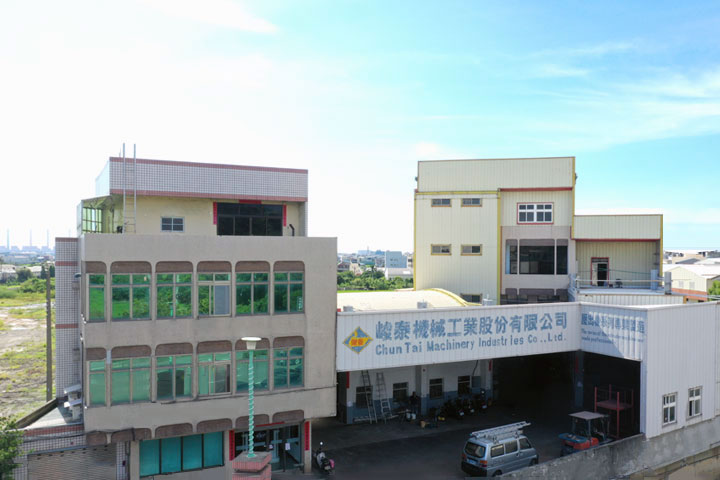
CHUN TAI Machinery was established in June 1970. With more than 50 years of experience specializing in recycling equipment such as plastic granulators and plastic sheet making machines, CHUN TAI insists on building top-quality machines and products that will raise customers' competitiveness.