How to Select Equipment for Prayer Mat and Halal Food Packaging Production in the Muslim Market
2026-05-03

1.8 billion Muslims worldwide. A Halal food market worth over USD 2 trillion annually. More than 3 million mosques globally. 2–3 million pilgrims making the Hajj every year. This is not a market driven by economic cycles — it runs on religious rhythm. Predictable, recurring, and growing.
Yet manufacturers entering this market consistently run into the same three problems:
1. They want to set up local production but don't know which line to start with.
2. They've bought low-cost equipment, only to struggle with quality issues and poor after-sales support.
3. Orders are there — but capacity can't keep up with Ramadan season demand.
For the Muslim market, two production lines cover the most critical manufacturing needs:
- Prayer Mats → PP Mat Making Machine
- Halal Food Packaging Bags → Plastic Flat Yarn Making Machine
For manufacturers looking to go further, adding a Plastic Monofilament Making Machine allows in-house production of sewing thread and edging yarn, reducing reliance on outside suppliers.
Why the Muslim Market Deserves a Dedicated Production Line
Demand here doesn't fluctuate with the economy — it follows a religious calendar, which makes it unusually predictable.
- Five daily prayers → Steady, ongoing consumption of prayer mats
- 2–3 months before Ramadan → Food stockpiling drives PP bag demand upward
- Hajj season → Concentrated purchasing of lightweight, portable prayer mats
Peak order periods are plannable in advance. Factories typically need to have production lines in place 4–6 months before peak season.
PP Mat Making Machine | Prayer Mat Production Solution
Prayer Mat Production Flow
- PP raw material
- PP Mat Making Machine (extrusion of flat strips + embossing)
- Weaving machine (forms the mat body)
- Cutting and edge binding
- Finished prayer mat
The critical factor in this line isn't output volume — it's strip consistency. Variations in strip width and thickness directly affect weaving efficiency and finished product appearance.
How Chun Tai Addresses This
- Strip stability : Precision temperature control and locked extrusion parameters keep strip dimensions consistent across long production runs
- Custom embossing : Embossing rollers designed to spec — geometric patterns for the Middle East, floral styles for Southeast Asia
- Size flexibility : Strip width adjustable without changing the die — switch between household mats and large mosque floor mats on the same line
- Cost control : Supports up to 50% recycled PP content, reducing material costs without compromising quality
Plastic Flat Yarn Making Machine | Halal Food Packaging Bag Production Line
PP Woven Bag Production Flow
- PP raw material (recycled content compatible)
- Plastic Flat Yarn Making Machine (extrudes flat yarn)
- Weaving machine (fabric base)
- Bag-making machine (cutting, sewing, Halal label printing)
- Finished PP woven bag
Rice, flour, pulses — the staple foods of the Muslim world move through supply chains in PP woven bags. It's a demand that doesn't go away. The 2–3 months before Ramadan consistently produce the industry's biggest order surge.
How Chun Tai Addresses This
- Yarn consistency : Adjustable draw ratio and precise temperature control keep flat yarn dimensions stable, reducing downstream loom stoppages
- Quality that holds : Output doesn't drift between shifts or material batches — suitable for continuous long-run production
- Line integration : Direct connection to downstream woven bag lines, minimizing handling and improving overall line efficiency
Plastic Monofilament Making Machine | Sewing Thread and Edging Yarn Integration
Role in the Production Line
- PP bag sewing thread — In-house production eliminates the risk of supplier shortages
- Prayer mat edging yarn — Improves finished product durability and consistency
For factories that want full production control, this machine reduces outside purchasing and stabilizes the supply chain.
When It Makes Sense to Add This Machine
- Export orders with tight delivery schedules
- Sewing thread costs represent a significant portion of production costs
- Quality consistency across the entire line is a priority
Why Choose Chun Tai Over Lower-Cost Equipment?
Low-cost machines look attractive on a purchase order. But what factories actually care about is whether equipment runs reliably for five or ten years — and whether technical support is there when something goes wrong.
| Evaluation Criteria | Chun Tai | Low-Cost Alternatives |
|---|---|---|
| Machine lifespan | Long | Shorter |
| Pre-shipment full machine testing | Standard procedure | Not guaranteed |
| Parts consistency | Stable specifications | Varies batch to batch |
| After-sales technical support | Complete documentation, fast response | Incomplete docs, slow response |
| Custom embossing | Designed to market requirements | Standard designs only |
| Taiwan-made brand credibility | Recognized in Middle East and Southeast Asia | — |
One day of unplanned downtime typically costs more than the price difference between machines. The right metric for equipment evaluation is 10-year total cost of ownership (TCO), not the purchase price.
Which Markets Are Worth Prioritizing?
| Country | Primary Demand | Strategic Focus |
|---|---|---|
| Indonesia | Prayer mats, PP bags | World's largest Muslim market |
| Pakistan | PP bag export | Manufacturing and export hub |
| Bangladesh | PP bags | Extension of textile industry |
| Turkey | Prayer mat export | Gateway to Middle East and Europe |
| Egypt | Food packaging | North Africa hub |
FAQ
What equipment is needed to manufacture prayer mats?
The core machine is the PP Mat Making Machine, which extrudes PP material into flat strips and applies embossing. Downstream, a weaving machine forms the mat body, followed by cutting and edge binding. Factories looking to reduce outside purchasing can add a Plastic Monofilament Making Machine to produce edging yarn in-house.
What machine is used to produce Halal food packaging bags (PP woven bags)?
Production runs in three stages: the Plastic Flat Yarn Making Machine extrudes flat yarn; a weaving machine produces the fabric base; a bag-making machine handles cutting, sewing, and printing. For factories that want to produce sewing thread in-house, a Plastic Monofilament Making Machine can be added to the line.
Can the PP Mat Making Machine produce different prayer mat sizes?
Yes. Strip width is adjustable without changing the die, so the same line can switch between household-size mats and large mosque floor mats — reducing changeover time and cost.
What should I look for when selecting a Plastic Flat Yarn Making Machine?
Yarn consistency is the critical factor. Unstable flat yarn dimensions cause downstream loom stoppages and finished product defects. Look for machines with reliable temperature control and an adjustable draw ratio to maintain consistent output across long production runs.
Can these machines process recycled PP material?
Yes. Both the PP Mat Making Machine and the Plastic Flat Yarn Making Machine support up to 50% recycled PP content. A drying and filtering system is recommended to maintain processing stability.
Does Ramadan affect demand for PP woven bags?
Significantly. In the 2–3 months before Ramadan, Halal food suppliers stock up on inventory, driving concentrated demand for rice bags, flour bags, and pulse packaging. Factories typically need to plan production capacity 4–6 months ahead to capture this window.
Is it necessary to add a Plastic Monofilament Making Machine?
For factories with stable export orders or tight delivery requirements, yes. Producing sewing thread and edging yarn in-house reduces outside purchasing costs, eliminates supply disruption risk, and gives better control over quality consistency across the entire line.
What is the main difference between Taiwan-made equipment and lower-cost alternatives?
The differences show up in machine lifespan, parts consistency, pre-shipment testing standards, and the quality of after-sales technical support. For factories running continuous production, these factors determine total cost of ownership over 10 years — which is a more meaningful number than the initial purchase price.
Share your production requirements with us — Chun Tai's engineering team will provide an equipment evaluation.
Explore Product Details
About Us
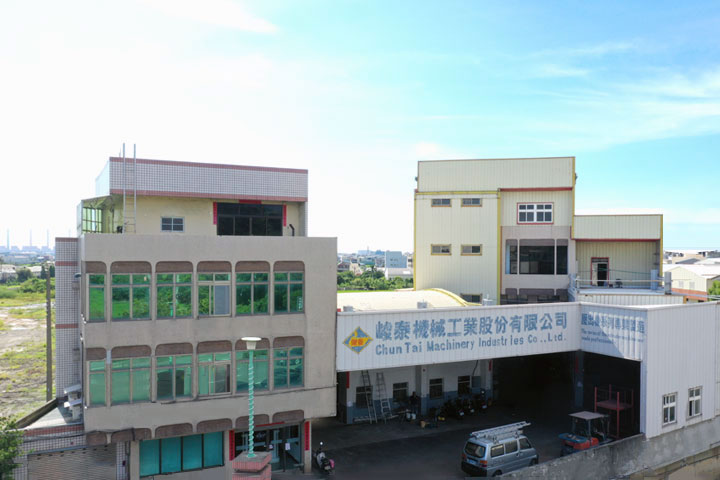
CHUN TAI Machinery was established in June 1970. With more than 50 years of experience specializing in recycling equipment such as plastic granulators and plastic sheet making machines, CHUN TAI insists on building top-quality machines and products that will raise customers' competitiveness.