PP Sheet Extruder Guide: How to Match Sheet Quality with Downstream Production
2026-08-01

If your PP sheet will be used for thermoforming cups, trays, food containers, or industrial liners, sheet quality cannot be judged by extruder output alone. Thickness tolerance, layer structure, cooling stability, and how the sheet is handled after extrusion all affect forming yield. Choosing a PP sheet extrusion machine without checking these factors may lead to production issues after installation.
This article walks through what a PP sheet extruder actually does, what’s inside the machine, how single-layer and multi-layer sheet production differ, and how to think about building out a full plastic sheet extrusion line — so you can narrow down what to ask for before requesting a quotation.
What a PP Sheet Extruder Does
A PP sheet extruder melts and homogenizes polypropylene resin, then forces it through a flat die to form a continuous sheet, which is then cooled, calibrated, and wound or cut to size. That’s the basic mechanism behind any sheet extruder — but two machines with similar throughput numbers can produce very different results once real production conditions come into play.
What tends to separate stable output from constant troubleshooting is line consistency: temperature control across the extrusion zones, even melt distribution across the die width, and how well the cooling section holds thickness tolerance as line speed changes. When sheet quality becomes unstable on the shop floor, the cause may not be limited to resin quality or operator settings. It often also relates to whether the PP Sheet Extruder was selected and set up for the required sheet specification and material mix.
Inside a PP Sheet Extrusion Machine
Before comparing machine models, it helps to know what you’re actually evaluating. A PP sheet extrusion machine is built from a few functional sections, and each one affects a different part of sheet quality.
Extruder and screw system. Most PP sheet lines run on a single screw extruder, sometimes paired with a sub-extruder when the sheet needs a co-extruded layer. Screw design and compression ratio affect melt stability, which is why virgin PP and recycled PP often need different screw settings even on the same machine.
Die and mold system. The flat die determines sheet width and how evenly melt flows across it. A poorly balanced die shows up as uneven thickness at the edges versus center of the sheet — a common complaint even on otherwise capable extruders.
Cooling, calibration, and material preparation. For PP, the cooling and calibration stage affects how the sheet sets and how stable the thickness remains during production. When moisture-sensitive materials such as PET or PLA are involved, material preparation equipment such as an Infrared Crystallizer Dryer may also be considered before extrusion.
Cutting and winding, or inline forming connection. Depending on the end use, sheet either gets slit and wound into rolls for later processing, or fed directly into a thermoforming machine inline. This last stage is where “PP sheet extruder” and “PP sheet extrusion line for thermoforming” start to diverge — and it’s a distinction worth getting right before you request a quotation, which we’ll come back to below.
PP Sheet Extrusion: Single-Layer vs. Multi-Layer
One thing worth being upfront about: no single PP sheet extruder handles every layer structure and material combination equally well. A machine model built for solid single-layer PP sheet and one built for multi-layer co-extrusion are not interchangeable just because both are labeled “PP sheet extrusion.”
For solid, single-layer PP sheet, the priority is usually thickness consistency and stable throughput — this covers most food container, tray, and industrial sheet applications where the material is a single PP formulation.
For multi-layer co-extruded PP sheet — structures like ABA or ABC, sometimes combining virgin and recycled PP, or PP with a barrier or cost-reduction layer — the machine setup needs a main extruder plus one or more sub-extruders. The die and cooling section also need to handle multiple melt streams without disrupting layer distribution. Chun Tai’s PP Sheet Extruder line supports solid sheets as well as co-extruded structures up to five layers (ABA, ABC, AB configurations). Which structure makes sense depends on your material cost targets and end-product requirements — it’s not a one-size-fits-all setting.
If your production plan involves recycled PP content, it’s also worth flagging early: material ratio and consistency directly affect screw settings and cooling parameters, so this is something to raise before machine selection, not after installation.
Building a Plastic Sheet Extrusion Line
For buyers producing thermoformed packaging — cups, trays, lids, disposable tableware — the sheet extruder is really one stage of a larger plastic sheet extrusion line, and how that line connects to the thermoforming process matters as much as the extruder specs themselves.
There are two common approaches. In an offline setup, sheet is extruded, wound into rolls, then unwound and reheated before forming. This is more flexible for switching between forming machines, but it adds a reheating step and floor space for roll storage. In an inline setup, the extruder feeds directly into the thermoformer, cutting out rewinding and reheating entirely — this matters most for high-speed, high-volume packaging lines where energy use and floor space are tight.
This is where model selection depends heavily on your downstream process, not just the resin. Chun Tai’s PP/PS Thermoforming Sheet Extruder is designed for PP or PS sheet used in direct thermoforming applications, making it suitable for continuous, high-speed production of cups, trays, and similar containers. Its material setup is built around consistent PP or PS properties rather than mixed formulations, so for production plans involving PP with recycled content or HIPS in multi-layer structures, the PP/HIPS Sheet Extruder is a better reference point, with independently adjustable layer thickness for two- and three-layer structures.
The point isn’t that one model is “better.” A sheet extruder chosen for standalone roll production and one chosen for inline thermoforming integration are answering different production questions. Mixing them up at the quotation stage tends to cause delays later. If you’re unsure which setup fits your forming process, it’s worth checking the Plastic Sheet Extruder Series overview or sharing your line layout with us directly before narrowing down a model.
Common Applications for PP Sheet
PP sheet from this type of production line typically feeds into food packaging (containers, trays, lids), disposable tableware for microwave or takeaway use, beverage cups and holders for food service, and industrial sheet for logistics liners or protective packaging. You can see representative end products on the sheet applications page. If your target application isn’t a clean match for what’s shown there, flag that detail when you reach out — it affects thickness range, layer structure, and whether inline forming makes sense for your setup.
FAQ
Is a PP sheet extruder only worth considering for large-volume factories?
No. Machine setups can be sized to expected capacity, and PP sheet extrusion lines are used for new installations, capacity expansion, and equipment replacement alike. Share your target output and we can help scope a suitable production line.
What’s the difference between a PP sheet extruder and a PP thermoforming sheet extruder?
A general-purpose PP sheet extruder produces sheet for winding into rolls, suited to a range of downstream uses. A thermoforming-specific setup is built for direct inline connection to a forming machine, aimed at continuous high-speed production. Which one fits depends on how your forming process is laid out — tell us your setup and we’ll point you to the right model.
Can a PP sheet extrusion machine run recycled PP or blended materials?
Many PP sheet extrusion lines can be designed to process virgin PP, recycled PP, or blended material, but the suitable setup depends on recycled-content ratio, material stability, filtration, and degassing requirements. Let us know your material mix so we can advise on the right machine setup.
Does this type of machine support multi-layer co-extrusion, or only single-layer sheet?
Both are possible, but not on the same settings — single-layer and multi-layer (ABA, ABC) structures require different extruder and die configurations. If you need multi-layer sheet, mention the target structure when you reach out so we can confirm feasibility.
What sheet thickness and width range can a PP sheet extrusion line produce?
Typical PP sheet extrusion setups cover roughly 0.3–1.8 mm thickness, with width customized to the production line. Exact ranges depend on the machine model and die width — send us your target spec and we’ll confirm what’s achievable.
Can the sheet extruder be connected directly to our existing thermoforming machine?
Some machine models support direct inline connection, others are designed for offline roll production. This depends on your current thermoformer and layout, so it’s best to share those details with us before we recommend a setup.
How do I know which PP sheet extruder model is right for my production line?
It depends on your sheet structure (single- or multi-layer), material mix, target thickness/width, and whether you need inline thermoforming connection. Send us your production requirements and we’ll help match them to the right machine model.
Ready to Scope Your PP Sheet Production Line?
If you’re planning a new PP sheet extrusion line, expanding existing capacity, or replacing aging equipment, share your sheet spec, material mix, and downstream forming setup with our team. We’ll help confirm which PP sheet extruder model fits your production line before you commit to a quotation — get in touch here.
About Us
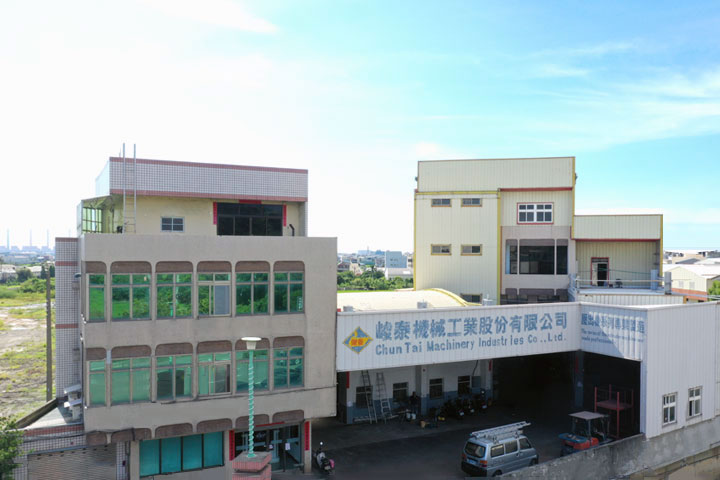
CHUN TAI Machinery was established in June 1970. With more than 50 years of experience specializing in recycling equipment such as plastic granulators and plastic sheet making machines, CHUN TAI insists on building top-quality machines and products that will raise customers' competitiveness.