PP Mat Making Machine in Emerging Markets: Applications and Opportunities
2026-04-02

In many emerging markets, PP woven mats have steady demand. Whether used for home flooring, outdoor covering, or market stalls, these products are part of everyday use and are relatively easy to sell.
For manufacturers, the key is not just the product itself, but the fact that this type of product is relatively easy to localize. As long as raw materials are available and the machine runs reliably, there is an opportunity to shift from relying on imports to producing locally and supplying the market directly.
This is why more and more companies are evaluating PP mat making machines. Not just to expand their product lines, but to find a production direction that can run long-term and grow with the market.
Why do these products sell across different markets?
The characteristics of PP mats are straightforward: durable, cost-controlled, and widely applicable. These three points match the conditions in most emerging markets.
- Africa: home mats, outdoor use, market applications
- Middle East: prayer mats and daily use
- Southeast Asia: agricultural and household use
- Latin America: outdoor and market applications
Although the use cases vary by region, the underlying demand is the same: a product that is low-cost, durable, and can be supplied at scale
What does a PP mat making machine actually do?
Simply put, it converts PP raw material into PP mat strips, which are then used to produce woven mats and related products.
- Raw material feeding (virgin or recycled)
- Extrusion
- Stretching to improve strength
- Winding for downstream processing
For real production, the focus is not the process itself, but whether the line can run stably, switch specifications easily, and handle different material conditions.
Why does recycled material directly affect profitability?
In this type of product, raw material cost is a major factor. If you can only use virgin material, it becomes difficult to stay competitive. But if the machine can consistently run with a certain percentage of recycled PP, you can significantly reduce costs and stay flexible in pricing.
Many manufacturers already operate on this model:
Recycling → Processing → Local sales or export
Can one machine serve different markets?
If you only focus on one country, the setup can be simple. But once you start exporting, the situation changes. Different markets require different sizes, patterns, and applications.
Taking CHUN TAI’s PP mat making machine as an example, it is designed to help manufacturers handle these variations:
- Capable of producing PP mat strips from 70–300 cm in width
- Supports up to around 50% recycled material blending
- No die change required when adjusting widths
- Embossing patterns can be customized for Middle Eastern and African markets
- Optional drying and filtration systems available
The key is not the specs, but that one production line can serve multiple markets View PP mat making machine product page
Why is competitiveness not about machine price, but the machine itself?
Many buyers start by comparing machine prices. But once production begins, they realize that what really affects cost and competitiveness is not the initial price, but whether the machine runs reliably, can handle recycled materials, and allows efficient product switching.
- Unstable machines lead to frequent downtime
- Inconsistent use of recycled material increases raw material cost
- Difficult product changeovers reduce flexibility
- Maintenance issues or waiting for parts increase downtime
When these issues add up, they often cost more than the price difference between machines. That’s why experienced buyers focus less on the initial price, and more on whether the machine can run consistently and produce stable, sellable output over time.
How does PP mat production actually make money?
The profit logic is straightforward. It comes down to cost control and stable production.
- Reduce raw material cost through recycled material
- Produce products with steady, everyday demand
- Keep the machine running consistently to minimize downtime
When these three conditions are met, the production line can operate sustainably over the long term.
Who should consider entering PP mat production?
- Manufacturers with plastic processing experience
- Businesses with access to recycled material
- Export traders looking to develop their own products
- Investors planning to enter manufacturing
Conclusion: This is not just a machine, but a way to build a business
The value of PP mat production is not tied to a single market. It can be applied across different regions. As long as there is demand and access to raw material, this model can continue to operate.
For many businesses, this is not just about buying a machine, but about building a product line that can run long term.
If you are evaluating this market, start by asking:
- Which market are you targeting?
- Where will your raw materials come from?
- Will you focus on a single product or multiple variations?
Clarifying these points will help you choose the right equipment. Contact CHUN TAI to discuss your production plan
FAQ
Can recycled material be used?
Yes, in most cases, a certain percentage of recycled PP can be used.
Can this serve different markets?
Yes, by adjusting sizes and patterns.
Do I need to frequently change the die?
No, some models allow width adjustment without changing the die.
Which markets are suitable?
Africa, the Middle East, Southeast Asia, and Latin America.
About Us
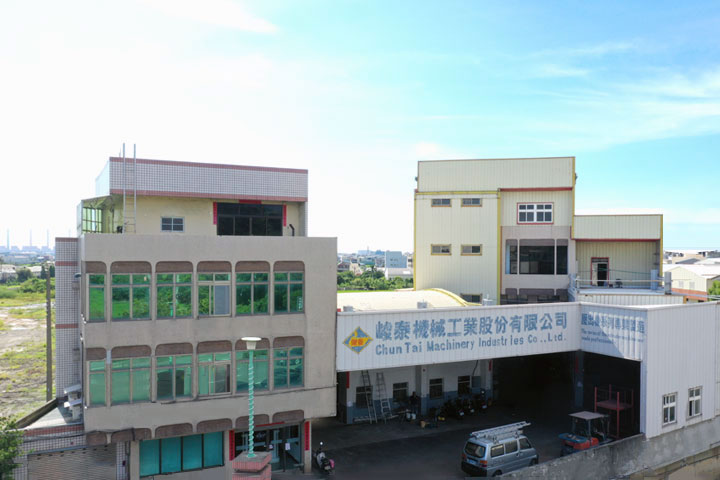
CHUN TAI Machinery was established in June 1970. With more than 50 years of experience specializing in recycling equipment such as plastic granulators and plastic sheet making machines, CHUN TAI insists on building top-quality machines and products that will raise customers' competitiveness.