How to Choose a Plastic Film Recycling Machine: Die-Face vs. Strand Pelletizing
2026-09-10

Choosing between die-face and strand pelletizing starts with the condition of the film waste, not the cutting method. Clean production film, washed film, printed film, and difficult-to-feed flexible waste can require different feeding, extrusion, degassing, and filtration arrangements. Even when the base material is the same, such as PE or PP, the recycling process can be very different.
A practical selection sequence is:
Film condition → Feeding → Extrusion → Degassing / filtration → Pelletizing
Die-face cutting can be used in both single-screw and two-stage recycling systems. Strand pelletizing can also be combined with different feeding and extrusion arrangements. The pelletizing method should therefore follow the process requirement rather than define it.
What Is the Difference Between Die-Face and Strand Pelletizing?
The difference is mainly in how the plastic melt is converted into pellets. With die-face pelletizing, the molten plastic is cut directly at the die face. With strand pelletizing, the melt is first formed into strands, then cooled and cut into pellets.From a recycling-line perspective, this difference alone is not enough to select a machine. The condition of the incoming film and the upstream process have a greater influence on the final machine configuration.
Why Can the Same PE or PP Film Need a Different Recycling Configuration?
Polymer type does not fully describe the material entering a recycling line. A clean LDPE production trim and a washed or printed LDPE film may share the same base polymer, but the process conditions are different.
Typical film conditions include:
- Clean production film : Relatively stable material with fewer upstream treatment requirements
- Washed film : Residual moisture can affect the recycling process and may require additional dewatering or degassing
- Printed film : Ink and other residues can increase the need for degassing and filtration
- Flexible PE / PP film and woven sacks : Lightweight material can make feeding an important part of the machine setup
- Mixed or difficult-to-feed film waste : Inconsistent bulk condition, moisture, or contamination can require a different feeding configuration
This is why two machines that both process PE or PP may still use different feeding, extrusion, filtration, and pelletizing arrangements.
How Do Feeding, Extrusion, and Degassing Affect the Machine Setup?
Three parts of the recycling process often determine how the line should be configured.
Feeding
Plastic film is lightweight, and its bulk condition can change after washing, shredding, printing, or mixing. Stable production scrap and difficult-to-feed flexible waste may therefore require different feeding arrangements. Force feeding and side feeding are two examples used to match different material conditions.
Extrusion
A film recycling line can use a single-screw or two-stage extrusion configuration. The choice is not a simple matter of one being better than the other. It depends on how the material needs to be processed before pelletizing, especially when moisture, printing, or contamination increases the demand on the extrusion process.
Degassing and Filtration
Washed, printed, or contamination-containing film places different demands on melt preparation. Degassing removes gases and volatile components generated during extrusion, while filtration removes solid contaminants from the melt. More demanding film conditions may therefore require additional degassing or filtration before the material reaches the pelletizing section.
The key point is that pelletizing is only the final stage. A suitable recycling configuration has to address the material condition before the melt reaches the cutter.
Which Recycling Configuration Fits Different Film Conditions?
The following table shows how different film conditions can lead to different CHUN TAI recycling configurations.
| Film Condition | Process Focus | Pelletizing Direction | CHUN TAI Solution |
|---|---|---|---|
| Clean HDPE / LDPE / LLDPE / BOPP production film | Integrated single-screw recycling | Die-face or strand, depending on configuration | Plastic Film Recycling Machine |
| PE / BOPP film using a single-screw process | Single-screw extrusion | Die-face | Single Screw Plastic Film Recycling Machine |
| Washed, moisture-containing, or ink-contaminated film | Two-stage extrusion + dual degassing / filtration | Die-face | Die-face Cutting Pelletizer |
| Flexible PE / PP film, woven sacks, printed film, mixed film waste | Two-stage extrusion | Strand | 2 Stages Plastic Film Recycling Machine |
| Film requiring force feeding | Force feeding + two-stage extrusion | Strand | 2 Stages Plastic Recycling Machine-CT-SPH Series |
| Difficult-to-feed or higher-moisture film | Side feeding + two-stage extrusion | Strand | 2 Stages Plastic Recycling Machine-CT-SPH-B Series |
For washed PE / PP film that requires dewatering before extrusion, the Squeezer CT-60SD Series can be used as upstream dewatering equipment.
FAQ
Is die-face pelletizing only suitable for clean film?
No. The Die-face Cutting Pelletizer CT-HDCW combines die-face cutting with two-stage extrusion, dual degassing, and dual filtration for washed, moisture-containing, and ink-contaminated films and sheets.
Can washed film use die-face pelletizing?
Yes. Washed film can use die-face pelletizing when the upstream extrusion, degassing, and filtration configuration is designed for that material condition.
Why do some film recycling machines use two-stage extrusion?
Two-stage extrusion is used when the recycling process requires a different combination of melt treatment, degassing, filtration, or feeding before pelletizing.
What is the difference between force feeding and side feeding?
Force feeding and side feeding are two different ways to move lightweight film into the extrusion process. The appropriate configuration depends on how easily the material can be fed and on its moisture and contamination condition.
About Us
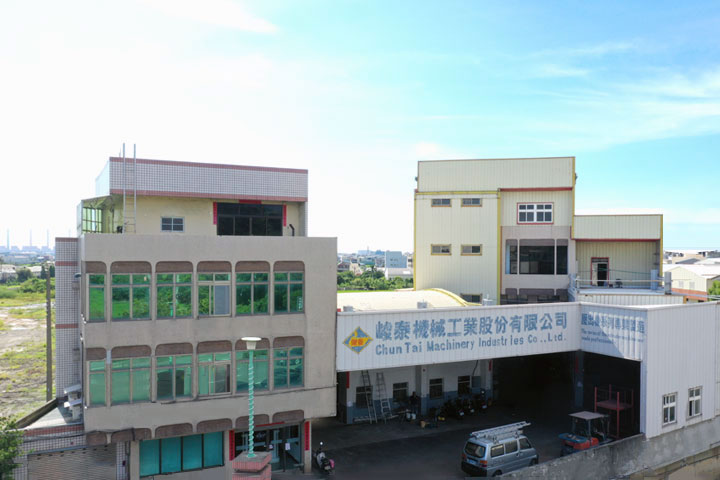
CHUN TAI Machinery was established in June 1970. With more than 50 years of experience specializing in recycling equipment such as plastic granulators and plastic sheet making machines, CHUN TAI insists on building top-quality machines and products that will raise customers' competitiveness.